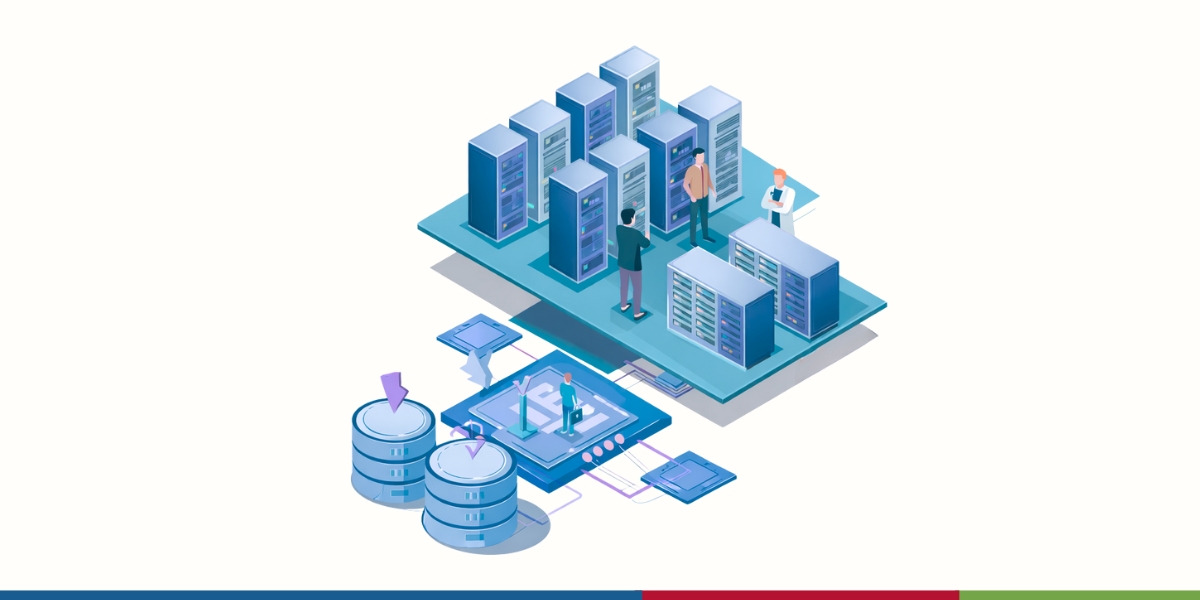
Serverless computing has moved from an experimental idea to a mainstream cloud model that reshapes how teams build and run applications. The name can be misleading. Servers still exist, but the cloud provider fully manages them. Developers write and deploy code; the platform handles provisioning, scaling, patching, and availability. You pay only for the compute time actually consumed. This shift changes both engineering productivity and infrastructure economics, yet it also introduces trade-offs that every technology leader must understand before committing production workloads.
At its core, serverless follows an event-driven execution model. Code is packaged as functions or lightweight containers. An event—an HTTP request, a file upload, a message on a queue, a database change, or a scheduled timer—triggers the platform to allocate resources, run the code, and then release those resources when the work finishes. When no events arrive, capacity scales to zero and cost drops to zero. This is the fundamental difference from traditional virtual machines or even container platforms, where you typically pay for running capacity whether or not it is busy.
Two related categories often appear under the serverless umbrella. Function-as-a-Service (FaaS) focuses on short-lived, stateless code execution. AWS Lambda, Azure Functions, and Google Cloud Functions are the primary examples. Backend-as-a-Service (BaaS) provides higher-level managed services such as authentication, databases, and storage that developers consume without managing the underlying systems. Many modern applications combine both: functions for custom logic and managed services for the supporting layers.
The benefits of this model are concrete and measurable for the right workloads. The most immediate advantage is the elimination of infrastructure management. Teams no longer provision servers, apply operating-system patches, tune auto-scaling groups, or plan capacity months in advance. Engineering effort shifts almost entirely to business logic and application features. Automatic scaling is another major strength. The platform responds to demand in near real time, expanding from zero instances to thousands without manual intervention. This elasticity is especially valuable for traffic that is spiky, unpredictable, or unknown in advance—new product launches, seasonal campaigns, or internal tools used intermittently.
Cost efficiency follows directly from the scaling model. Traditional servers or containers incur charges for idle time. Serverless billing is typically based on the number of requests and the duration of execution measured in GB-seconds (memory allocated multiplied by runtime). Idle periods cost nothing. For workloads with long quiet periods or highly variable demand, organizations frequently report substantial reductions compared with always-on infrastructure. Developer velocity also improves. Deployment cycles shorten because there is no need to manage fleets of servers or complex orchestration layers for many use cases. Features reach production faster, and experimentation becomes cheaper.
These advantages, however, come with clear limitations that can undermine projects when ignored. Cold starts remain the most discussed performance characteristic. When a function has been idle, the platform must initialize a new execution environment before the first request can be processed. The delay ranges from tens of milliseconds for lightweight runtimes such as Node.js or Python to more than a second for heavier runtimes such as Java or .NET with large dependency graphs. Providers have introduced mitigations—provisioned concurrency, SnapStart, always-ready instances, and lighter runtimes—but cold starts are inherent to the scale-to-zero economic model. Latency-sensitive user-facing paths often require careful design or hybrid approaches that keep some capacity warm.
Execution time limits create another hard boundary. Most major platforms cap individual function runs (commonly 15 minutes on AWS Lambda, longer on some Azure and Google plans). Long-running processes such as large video encoding jobs, complex machine-learning training, or multi-hour batch pipelines are poor fits and usually move to containers, dedicated compute, or specialized batch services. State management is deliberately externalized. Functions are expected to be stateless; any durable data must live in managed databases, object storage, or caches. This design improves scalability and resilience but requires architectural discipline and can introduce additional latency or complexity when functions need shared context.
Vendor lock-in is a strategic concern rather than a purely technical one. Functions integrate tightly with provider-specific event sources, identity systems, and managed services. Moving a production serverless application from one cloud to another frequently requires significant rewriting of triggers, permissions, and surrounding orchestration. Abstraction layers and multi-cloud frameworks exist, yet they add their own overhead and rarely eliminate the cost of migration entirely. Observability and debugging also become more distributed. Tracing a request across dozens of short-lived functions, queues, and managed services demands mature tooling and consistent instrumentation; traditional server-centric monitoring approaches fall short.
Real-world use cases illustrate where serverless delivers the strongest results. Event-driven data pipelines are a classic fit. An object uploaded to storage triggers a function that validates, transforms, and routes the data. Image and video processing workflows—resizing, watermarking, thumbnail generation, metadata extraction—map cleanly onto this pattern and scale with upload volume rather than fixed capacity. API backends and microservices that experience variable traffic benefit from automatic scaling and pay-per-use economics, especially when combined with API gateways. Scheduled and cron-style jobs (report generation, cleanup tasks, data synchronization) run only when needed and cost almost nothing during idle periods. Webhook receivers, IoT telemetry ingestion, and notification systems also align well because demand is inherently event-based.
Emerging patterns in 2026 further expand the model’s reach. AI inference and retrieval-augmented generation pipelines often exhibit bursty traffic and short execution times, making serverless an economical choice for on-demand model calls rather than always-on GPU capacity. Edge serverless offerings reduce latency by running code closer to users. Orchestration services (Step Functions, Durable Functions, Workflows) allow complex multi-step processes to be composed from individual functions while still retaining the managed scaling model.
Choosing among the major platforms depends on existing ecosystem commitments and specific requirements. AWS Lambda remains the most mature and broadly integrated option, with deep connections across the AWS service catalog and extensive tooling. Azure Functions integrates tightly with the Microsoft enterprise stack, identity services, and hybrid environments, and offers flexible hosting plans including longer execution times in certain configurations. Google Cloud Functions and Cloud Run emphasize simplicity, strong data and AI service integration, and competitive cold-start characteristics for many workloads. Pricing models are similar at a high level (request volume plus compute duration) but diverge in free-tier generosity, regional availability, and the cost of supporting services such as gateways and messaging.
A practical decision framework helps avoid both under- and over-adoption. Start by characterizing the workload: Is demand spiky or steady? Are executions short and stateless? Is sub-second latency critical on every request? Does the application already rely heavily on a particular cloud’s managed services? Calculate total cost of ownership including not only function invocation charges but also the surrounding services, data transfer, observability tooling, and the engineering effort required for distributed debugging. Pilot with a bounded, non-critical use case—such as a scheduled job or an image-processing pipeline—before migrating core systems. Measure cold-start impact, cost at realistic volumes, and operational complexity. Expand only where the metrics confirm the expected advantages.
Serverless is not a universal replacement for containers or virtual machines. It is a powerful complementary model that excels when workloads are event-driven, modular, and variable in demand. Organizations that treat it as one tool among several—paired with containers for long-running or latency-critical services and traditional compute for specialized needs—capture the productivity and cost benefits while containing the limitations. As platforms continue to reduce cold-start penalties, extend execution limits, and improve observability, the range of suitable workloads will keep expanding. The teams that succeed are those that match the architecture to the shape of the problem rather than chasing the latest architectural trend.
For Madros Academy of Technologies and technology leaders evaluating cloud strategies, serverless offers a clear path to higher developer velocity and more efficient resource use when applied deliberately. The key is understanding both the promise and the constraints so that every function deployed delivers measurable value without creating hidden operational debt.
Loved this post?
Browse the catalogue of our Cohort, Elite, VIP and Self-Paced programmes to find one that may suit your needs.
Explore our programmes →Comments (0)
No comments yet. Be the first to leave a comment!
Leave a Comment
Categories
- 5G, Networking & Connectivity
- Artificial Intelligence
- Big Data & Data Engineering
- Blockchain & Web3
- Cloud Computing
- Cybersecurity
- Data Science & Analytics
- DevOps & Site Reliability
- Emerging & Frontier Technologies
- Ethical Hacking & Penetration Testing
- Green Tech & Sustainable Technology
- Internet of Things (IoT)
- Machine Learning
- Madros Events
- Mobile App Development
- Product Design
- Programming Languages & Paradigms
- Quantum Computing
- Software Development
- Tech Startups & Entrepreneurship
- Virtual & Augmented Reality
- Web Developement
Recent Posts
• Something Big Is Coming to MADROS on Dec 12 • IoT Data Pipelines: Collecting, Processing, and Analyzing Massive Sensor Streams • Edge AI in IoT: Running Machine Learning Models Directly on Devices • Smart Home Ecosystems: Interoperability Issues and Future Standards • Industrial IoT (IIoT): Transforming Manufacturing with Sensors and Predictive Analytics • IoT Security Challenges: Protecting Connected Devices from Emerging Threats • Madros Workstation: Building the Digital Workspace for the Modern African ProfessionalReady to Level Up?
Explore our practical, live, and certification tech courses today.
Explore Courses →