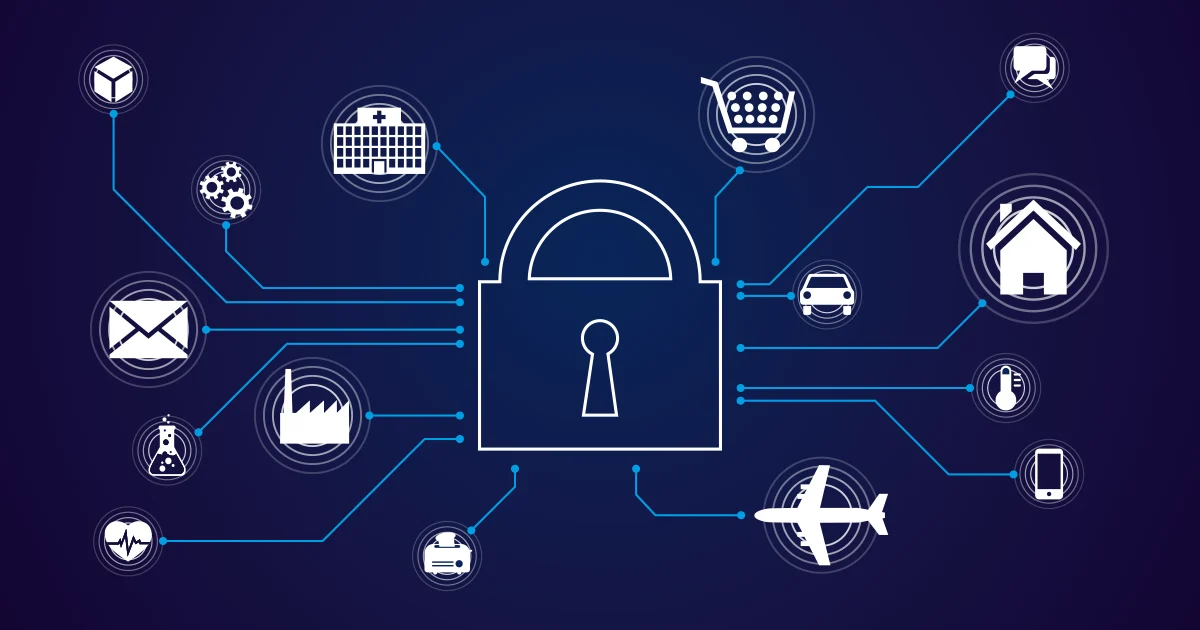
The Internet of Things has moved far beyond a futuristic concept. Today it quietly powers factories, hospitals, homes, cities, and critical infrastructure. Sensors track machine health on production lines, smart meters optimize energy use, medical wearables transmit patient data in real time, and billions of consumer devices automate everyday life. This hyper-connectivity delivers unprecedented efficiency and insight. Yet every new endpoint also expands the attack surface. As the number of connected devices continues to climb into the tens of billions, the security of those devices has become one of the defining challenges of the modern technology landscape.
What makes IoT security uniquely difficult is the combination of scale, diversity, and resource constraints. Unlike traditional IT systems that live behind corporate firewalls and receive regular patches, many IoT devices are deployed in remote or harsh environments, run on limited processing power and memory, and remain in the field for years—sometimes a decade or more—without updates. Manufacturers often prioritize cost, speed to market, and functionality over robust security. The result is a global network of devices that are frequently easy to discover, easy to compromise, and capable of causing outsized damage when they fall into the wrong hands.
Understanding the nature of these risks is the first step toward building effective defenses. The challenges are not abstract; they manifest in concrete technical and operational weaknesses that attackers actively exploit.
One of the most persistent problems remains weak or default credentials. Countless devices still ship with factory-set usernames and passwords that are publicly documented or trivially guessable. Once an attacker gains access to even a single device, that foothold can be used to pivot deeper into the network. The famous Mirai botnet of 2016 demonstrated this vulnerability at scale when it recruited hundreds of thousands of poorly secured cameras and routers to launch massive distributed denial-of-service attacks. Although awareness has improved, default credentials continue to appear in new products, especially lower-cost consumer and industrial devices.
Closely related is the challenge of insecure update mechanisms. Many IoT devices either lack any over-the-air update capability or implement updates in ways that are themselves vulnerable to interception and tampering. When a critical vulnerability is discovered, organizations may find themselves unable to patch devices without physical access or expensive truck rolls. In industrial settings this problem is amplified because production systems cannot afford downtime, creating pressure to leave known-vulnerable equipment running.
Encryption and authentication gaps compound the issue. Data traveling between sensors, gateways, and cloud platforms is sometimes transmitted in clear text or protected by outdated cryptographic standards. Device-to-device and device-to-cloud authentication may rely on static keys that are hard-coded or poorly managed. Once those secrets leak—whether through reverse engineering of firmware or a supply-chain compromise—attackers can impersonate legitimate devices or eavesdrop on sensitive telemetry.
The supply chain itself has become a major vector. Modern IoT devices incorporate components, firmware libraries, and software modules from dozens of third-party suppliers. A single compromised chip, a malicious update pushed by a vendor, or a vulnerable open-source library can introduce backdoors or weaknesses into products long before they reach the customer. Recent years have seen growing concern about hardware-level implants and firmware that cannot be independently verified, raising difficult questions about trust in global manufacturing networks.
Physical security of devices is another frequently overlooked dimension. Sensors and controllers installed in public spaces, factory floors, or remote infrastructure can be physically accessed by attackers who extract firmware, plant rogue devices, or simply destroy equipment. While traditional IT security focuses heavily on logical controls, IoT security must also account for the physical world in which devices operate.
These technical weaknesses feed into larger systemic risks. Once compromised, IoT devices can serve multiple malicious purposes. They can act as entry points into enterprise networks, enabling lateral movement toward higher-value targets. They can be conscripted into botnets that launch DDoS attacks, mine cryptocurrency, or send spam. In industrial and critical infrastructure environments, they can be manipulated to cause physical disruption—altering sensor readings, shutting down machinery, or creating unsafe conditions. Ransomware groups have increasingly targeted operational technology environments, recognizing that the potential for real-world impact gives them greater leverage.
The convergence of IT and OT networks has intensified these dangers. As factories and utilities connect previously isolated systems to corporate networks and the internet for better visibility and predictive maintenance, the air gaps that once provided a measure of protection have largely disappeared. An attacker who compromises a poorly secured temperature sensor or programmable logic controller may gain a pathway into systems that control physical processes.
Regulatory and standards landscapes are still catching up. While frameworks such as the NIST IoT Cybersecurity Framework, the European Union’s Cyber Resilience Act, and various industry-specific guidelines provide valuable direction, adoption remains uneven. Many smaller manufacturers lack the resources or expertise to implement comprehensive security programs, and procurement teams often lack clear criteria for evaluating the security posture of the devices they purchase.
Addressing these challenges requires a multi-layered approach that begins at the design stage and continues throughout the device lifecycle. Secure-by-design principles must become standard practice. This includes unique, strong device identities; secure boot processes that verify firmware integrity; hardware-based roots of trust where feasible; and the elimination of default credentials. Manufacturers should adopt threat modeling early in the product development cycle and subject devices to rigorous penetration testing before release.
For organizations deploying IoT at scale, network segmentation is essential. IoT devices should be isolated from critical business systems through dedicated network segments, zero-trust architectures, and strict access controls. Micro-segmentation and software-defined perimeters can further limit the blast radius of any single compromised device. Continuous monitoring and anomaly detection play a crucial complementary role. Because many IoT devices exhibit relatively predictable communication patterns, deviations—such as unexpected outbound connections or unusual data volumes—can serve as early indicators of compromise.
Lifecycle management deserves equal attention. Organizations need clear processes for inventorying devices, tracking firmware versions, applying updates when available, and securely decommissioning equipment at end of life. Where over-the-air updates are impractical, compensating controls such as network-level protections and more frequent physical inspections become necessary.
Collaboration across the ecosystem is also vital. Device manufacturers, cloud platform providers, security researchers, and end users all share responsibility. Bug bounty programs focused on IoT, coordinated vulnerability disclosure processes, and greater transparency about software bills of materials can help surface and remediate weaknesses faster. Industry consortia and standards bodies continue to refine best practices, and organizations that actively participate in these efforts position themselves to stay ahead of emerging threats.
Looking ahead, several technological developments offer both new risks and new defensive opportunities. The rise of edge AI—running machine learning models directly on devices—can improve local anomaly detection and reduce reliance on cloud connectivity, but it also introduces new attack surfaces around model integrity and adversarial inputs. 5G and private wireless networks enable denser deployments and lower latency, yet they expand the number of potential entry points. Quantum computing, while still years away from breaking widely used cryptography at scale, is already prompting research into post-quantum algorithms suitable for constrained IoT devices.
For Madros Academy of Technologies readers working in manufacturing, smart infrastructure, or digital transformation, the message is clear: IoT security cannot be treated as an afterthought or a purely technical problem. It is a strategic imperative that intersects with operational resilience, regulatory compliance, brand reputation, and even physical safety. Building secure connected systems requires intentional design, disciplined operations, and ongoing investment in both technology and people.
The devices we connect today will shape the reliability and safety of the systems we depend on tomorrow. By confronting the security challenges of the Internet of Things with rigor and foresight, organizations can unlock the full value of connectivity while keeping the risks within acceptable bounds. The alternative—leaving billions of endpoints inadequately protected—is a risk no modern enterprise can afford to ignore.
Loved this post?
Enroll in our private structured training — 30% off if you pay in full.
Enrol in Elite: Computer Appreciation →Comments (0)
No comments yet. Be the first to leave a comment!
Leave a Comment
Categories
- 5G, Networking & Connectivity
- Artificial Intelligence
- Big Data & Data Engineering
- Blockchain & Web3
- Cloud Computing
- Cybersecurity
- Data Science & Analytics
- DevOps & Site Reliability
- Emerging & Frontier Technologies
- Ethical Hacking & Penetration Testing
- Green Tech & Sustainable Technology
- Internet of Things (IoT)
- Machine Learning
- Madros Events
- Mobile App Development
- Product Design
- Programming Languages & Paradigms
- Quantum Computing
- Software Development
- Tech Startups & Entrepreneurship
- Virtual & Augmented Reality
- Web Developement
Recent Posts
• Something Big Is Coming to MADROS on Dec 12 • IoT Data Pipelines: Collecting, Processing, and Analyzing Massive Sensor Streams • Edge AI in IoT: Running Machine Learning Models Directly on Devices • Smart Home Ecosystems: Interoperability Issues and Future Standards • Industrial IoT (IIoT): Transforming Manufacturing with Sensors and Predictive Analytics • IoT Security Challenges: Protecting Connected Devices from Emerging Threats • Madros Workstation: Building the Digital Workspace for the Modern African ProfessionalReady to Level Up?
Explore our practical, live, and certification tech courses today.
Explore Courses →