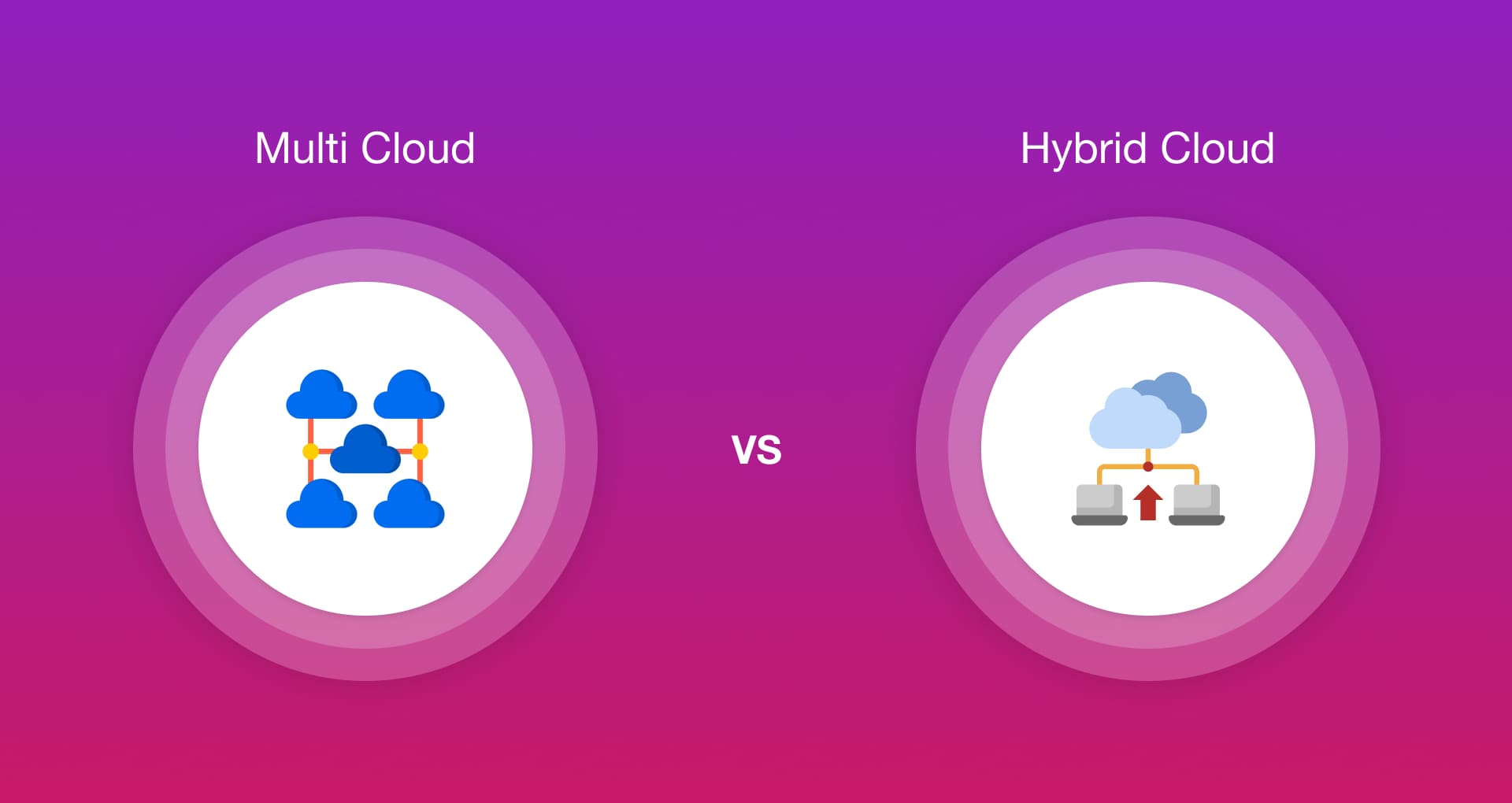
In today’s technology landscape, few decisions shape an organization’s agility, resilience, and bottom line more profoundly than how it deploys cloud infrastructure. As enterprises move beyond simple “lift-and-shift” migrations, two dominant models have emerged: multi-cloud and hybrid cloud. Both promise greater flexibility than a single public-cloud provider, yet they solve different problems and introduce distinct operational realities. Understanding the distinction is essential for any technology leader focused on scalability and cost control.
At first glance the terms appear interchangeable, and many organizations end up running environments that qualify as both. The critical difference lies in their primary design goals. Hybrid cloud integrates private infrastructure—whether on-premises data centers, colocated private clouds, or dedicated hosted environments—with one or more public clouds. The emphasis is on workload placement across ownership boundaries: keeping sensitive or latency-critical systems under direct control while bursting into the public cloud for elasticity. Multi-cloud, by contrast, focuses on provider diversity. It distributes workloads across two or more independent public cloud platforms (typically AWS, Microsoft Azure, and Google Cloud) without requiring private infrastructure. The strategic intent is to avoid vendor lock-in, select best-of-breed services, and improve resilience through geographic and provider redundancy.
This distinction becomes clearer when examined through the lens of architecture. In a hybrid environment, connectivity is usually tight—dedicated links, VPNs, or private interconnects join the private and public domains so applications and data can move relatively seamlessly. Governance, identity, and policy are often centralized. In a pure multi-cloud setup, the environments are more loosely coupled. Workloads may run independently on different providers, with integration handled at the application or orchestration layer rather than at the infrastructure level. Many mature enterprises ultimately operate a hybrid multi-cloud model: private infrastructure for regulated or steady-state workloads, plus multiple public clouds for specialized services and global reach.
Scalability is frequently cited as a primary benefit of both approaches, yet the mechanisms differ significantly. Hybrid cloud achieves scale primarily through cloud bursting. Predictable baseline capacity remains on private infrastructure that the organization owns and fully controls. When demand spikes—seasonal traffic, batch analytics jobs, or sudden user growth—workloads overflow into the public cloud. This model is particularly effective for organizations that already possess substantial sunk investment in hardware and want to avoid over-provisioning. Scalability remains bounded by the capacity of the private environment for critical workloads, while the public cloud supplies virtually unlimited headroom for less sensitive tasks.
Multi-cloud scalability operates differently. Because every component resides in public cloud environments, capacity is effectively elastic across providers. Organizations can place latency-sensitive applications closer to users by choosing regional footprints from different vendors, route traffic dynamically, or fail over between providers during outages. Containerization and Kubernetes-based orchestration further enhance this flexibility, allowing portable workloads to move between clouds with reduced friction. The result is horizontal scale that is less constrained by any single provider’s regional limitations or temporary capacity constraints. However, true multi-cloud scale requires deliberate architecture: applications must be designed for portability, data must be managed carefully to avoid expensive egress charges, and networking must support consistent performance across provider boundaries.
Cost control is equally nuanced and often misunderstood. Hybrid cloud frequently delivers more predictable economics for steady-state workloads. Capital expenditure on private infrastructure is amortized over years, and operational costs for power, cooling, and staffing are relatively fixed. Public cloud resources are used only when needed, converting variable demand into operational expense. This combination can be highly efficient for organizations with consistent baseline utilization. The trade-off appears when private capacity sits under-utilized or when the cost of maintaining dual skill sets and integration layers exceeds the savings.
Multi-cloud cost dynamics revolve around arbitrage and negotiation leverage. Different providers excel at different price-performance points for specific services—compute instances, managed databases, AI accelerators, or storage tiers. By matching workloads to the most economical provider, organizations can reduce unit costs. Spreading spend across vendors also strengthens negotiating position for enterprise discount programs. Yet multi-cloud introduces its own cost multipliers: data transfer fees between clouds, duplicated tooling and monitoring platforms, higher operational overhead from managing multiple identity systems and security postures, and the risk of suboptimal reserved-capacity commitments when spend is fragmented. Without mature FinOps practices—unified visibility, consistent tagging, automated rightsizing, and chargeback models—multi-cloud environments frequently become more expensive than a well-optimized single-cloud deployment.
Real-world adoption data underscores that neither model is theoretical. Industry surveys consistently show that the majority of enterprises now operate some form of multi-cloud or hybrid strategy. Many run applications across private infrastructure, multiple public clouds, and even edge or colocation facilities simultaneously. The drivers are practical: data residency and sovereignty requirements, legacy system modernization timelines, specialized service needs (for example, one provider’s superior AI platform paired with another’s global content delivery network), and resilience against single-provider outages or commercial changes.
Challenges accompany both approaches and must be addressed deliberately. Hybrid environments demand robust connectivity, consistent security policies across ownership boundaries, and skilled teams that understand both traditional infrastructure and cloud-native operations. Data synchronization and latency between private and public domains can become bottlenecks if not carefully engineered. Multi-cloud complexity centers on operational consistency: multiple consoles, billing formats, IAM models, and compliance attestations. Cross-cloud networking and data movement can generate unexpected expenses, while governance sprawl risks inconsistent security postures. In both cases, success depends less on the choice of model and more on the maturity of platform engineering, automation, observability, and financial management disciplines.
A practical decision framework helps cut through the noise. Begin by mapping workloads according to sensitivity, performance characteristics, regulatory constraints, and economic profile. Workloads that require strict data residency, low and predictable latency to on-premises systems, or heavy customization of underlying infrastructure lean toward hybrid placement. Cloud-native applications that benefit from specialized managed services, global distribution, or independent scaling across providers are stronger candidates for multi-cloud distribution. Next, assess organizational readiness. Hybrid demands investment in private infrastructure management and hybrid networking expertise. Multi-cloud requires strong automation, portable architectures (containers, infrastructure-as-code, abstraction layers), and FinOps capability. Finally, quantify the total cost of ownership, including not only consumption but also tooling, skills, data transfer, and risk mitigation. Pilot carefully, measure outcomes against the original business case, and expand only where value is demonstrable.
Looking forward, the boundary between the two models continues to blur. Advances in consistent control planes, sovereign cloud offerings from the major hyperscalers, edge computing integration, and AI-driven workload placement are making hybrid multi-cloud architectures more operationally viable. Organizations that treat cloud strategy as a continuous optimization process—rather than a one-time architectural choice—position themselves to capture both the control of hybrid environments and the flexibility of multi-cloud while keeping costs and complexity in check.
For technology leaders at Madros Academy of Technologies and beyond, the path forward is clear: start with workload and business requirements rather than vendor preferences, invest in the operational foundations that make distributed environments manageable, and treat scalability and cost control as ongoing disciplines rather than automatic outcomes of any particular model. The organizations that master this balance will turn infrastructure from a constraint into a genuine competitive advantage.
Loved this post?
Browse the catalogue of our Cohort, Elite, VIP and Self-Paced programmes to find one that may suit your needs.
Explore our programmes →Comments (0)
No comments yet. Be the first to leave a comment!
Leave a Comment
Categories
- 5G, Networking & Connectivity
- Artificial Intelligence
- Big Data & Data Engineering
- Blockchain & Web3
- Cloud Computing
- Cybersecurity
- Data Science & Analytics
- DevOps & Site Reliability
- Emerging & Frontier Technologies
- Ethical Hacking & Penetration Testing
- Green Tech & Sustainable Technology
- Internet of Things (IoT)
- Machine Learning
- Madros Events
- Mobile App Development
- Product Design
- Programming Languages & Paradigms
- Quantum Computing
- Software Development
- Tech Startups & Entrepreneurship
- Virtual & Augmented Reality
- Web Developement
Recent Posts
• Something Big Is Coming to MADROS on Dec 12 • IoT Data Pipelines: Collecting, Processing, and Analyzing Massive Sensor Streams • Edge AI in IoT: Running Machine Learning Models Directly on Devices • Smart Home Ecosystems: Interoperability Issues and Future Standards • Industrial IoT (IIoT): Transforming Manufacturing with Sensors and Predictive Analytics • IoT Security Challenges: Protecting Connected Devices from Emerging Threats • Madros Workstation: Building the Digital Workspace for the Modern African ProfessionalReady to Level Up?
Explore our practical, live, and certification tech courses today.
Explore Courses →